Mastering the Invisible Mechanics of Ballroom: Course Overview
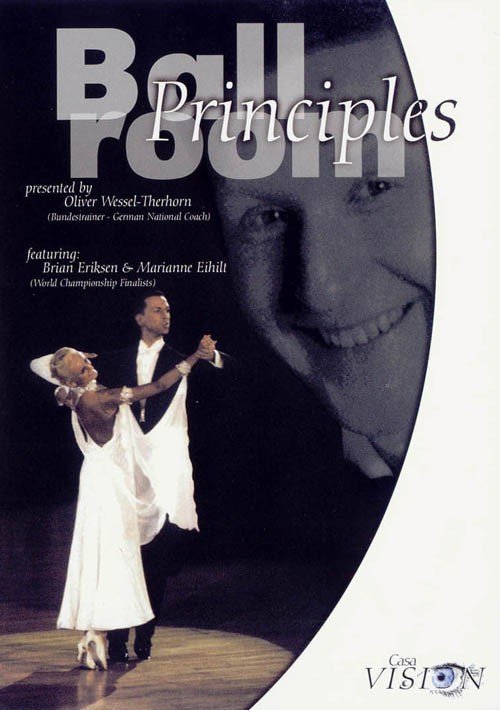
Too often, competitive couples and student medalists treat ballroom dancing as a dry list of separate figures to be memorized, completely overlooking the underlying physical laws that make those figures work. The Ballroom Principles by Oliver Wessel-Therhorn stands as a groundbreaking visual textbook designed to shatter that rigid habit. It focuses entirely on how to use the technique rather than just what step to take.
Spanning an intensive, private-lesson style studio breakdown, legendary dance pioneer Oliver Wessel-Therhorn takes you on a deep, analytical journey into the exact structural secrets that produce a world-class silhouette. Supported by the breath-taking precision and flawless lines of Danish champions Brian Eriksen and Marianne Eihilt, this program isolates the universal rules that dictate every single step, change of direction, and variation in Standard dancing. This collection serves as an uncompromised training manual for solo practitioners, competitive couples, and professional coaches seeking to build unshakeable balance and massive floor presence.
Key Methodological Focus Areas
Universal Mechanical Application: Dismantling the confusion of individual dance steps by focusing on the 8 core physical principles that apply to every piece of standard choreography.
The Physics of Balanced Partnership: Deep analytical look into how the leader and follower calibrate their weight centers to maximize horizontal flight without breaking frame.
Isolated Tango Foundation Archive: A dedicated, standalone technical chapter built specifically to break down the flat-weighted, sharp, non-swing actions that define Tango geometry.
High-Fidelity Visual Demonstrations: Multi-angle studio camera tracking designed to show subtle ankle extensions, joint absorption, pelvic alignments, and head placements in real-time.
The 10-Chapter Core Training Syllabus Breakdown
This comprehensive digital masterclass is systematically organized into progressive technical blocks, transforming abstract ballroom theory into actionable floor drills:
Chapter 1: Intro ‘The Ballroom Principles’
Setting the instructional blueprint, defining how to bridge the gap between written textbook theory and functional, artistic movement on the floor.
Chapter 2: Basic Principles — Balance
Calibrating your central axis. Understanding how to find, maintain, and recover your center of gravity during high-speed travel and rotational movements.
Chapter 3: Basic Principles — Foot & Leg Action
Deconstructing the mechanics of the lower limbs. Mastering the precise foot-to-floor pressure, tracking paths, and ankle extensions needed to send power upward through the spine.
Chapter 4: Basic Principles — Movement
Managing movement in space. Training the core to project weight forward, backward, and laterally, turning basic steps into an ongoing, fluid visual story.
Chapter 5: Basic Principles — Lowering & Rising
The laws of rise and fall. Fine-tuning knee compression and metronomic ankle spring to create beautiful, breathing vertical sways without freezing the joints.
Chapter 6: Basic Principles — Rotations
The mechanics of turning. Isolating how to pass weight cleanly through natural and reverse turns without separating the right-side hip connection.
Chapter 7: Basic Principles — Sway
Creating the illusion of flight. Learning how to project dynamic, three-dimensional body sway from a stabilized lower pelvis rather than pulling back with the shoulders.
Chapter 8: Basic Principles — Promenades
Mastering the open promenade position. Maintaining a quiet, unified upper frame while opening the hips cleanly to execute crisp tracking steps.
Chapter 9: Basic Principles — Role Play
Developing a high-level competitive presence. Deep-dive advice on the physical relationship, leadership cues, and emotional dialogue between the leader and follower.
Chapter 10: Basic Principles — The Tango (Tango Specialized Chapter)
Stripping away the pendulum swing actions of Waltz and Foxtrot to isolate the strict staccato grounding, compact frame, and sharp dissociation tracking unique to Tango.
Technical Masterclass Notes: Pro-Tips with Oliver Wessel-Therhorn
Question: Many competitive couples understand their choreographic patterns perfectly, yet they consistently struggle with a heavy, unstable connection on the floor. How does The Ballroom Principles fix this specific performance block?
Answer: This common roadblock happens because dancers tend to treat technique as a passive set of static foot positions. They look at a textbook diagram and try to copy where the foot lands, but they completely ignore the internal weight transfer and joint elasticity that must carry them there. This creates a stiff, mechanical performance where partners are constantly fighting each other’s frames and losing their center line.
Throughout this digital masterclass series, we demonstrate that true ballroom excellence is built entirely on the concept of core grounding and spatial intent. The feet are simply the wheels of the machine; the true movement is steered by your center distribution and joint absorption.
By practicing the 8 universal chapters we have mapped out in this archive, you will learn how to compress your weight firmly into the tracking foot, allowing that internal kinetic energy to naturally drive your body rise, rotations, and sway from the floor upward. Once you stop forcing your frame with your arms and start steering the movement through your shared core weight below, your dancing transitions from a rigid routine into a breathtaking, powerful performance that glides effortlessly across the floor and instantly captures top marks from any judging panel.


Reviews
There are no reviews yet.