The Orchestral Cross-Over Masterclass: Album Overview
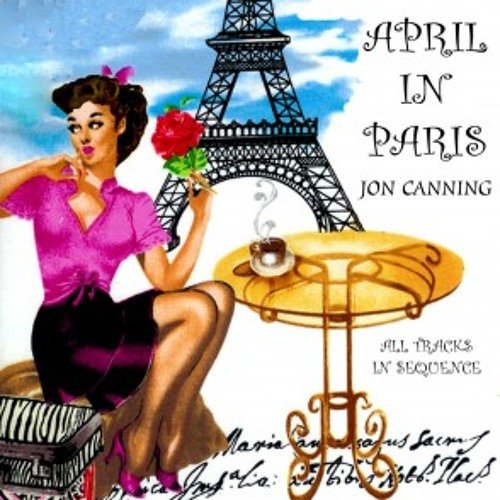
For studios, coaches, and multi-discipline competitors, sourcing high-fidelity music that seamlessly transitions between the elegant sweeping flight of the Standard category and the rhythmically dense, grounded actions of the Latin category is an ongoing challenge. April In Paris by Jon Canning provides a complete, 26-track sonic textbook designed to satisfy both competitive landscapes simultaneously.
Masterfully arranged by Jon Canning, this expansive collection rejects synthetic patterns in favor of rich piano melodies, crisp brass horn sections, and evocative vocal tracks. Every single arrangement has been systematically tailored to keep a locked metronomic cadence while preserving the distinct cultural and emotional atmosphere required to breathe life into top-tier choreography.
Key Orchestral & Competitive Pillars
Comprehensive Dual-Discipline Mapping: A rare, all-in-one archive meticulously organized to provide high-level training tracks for both the ballroom smooth swing dances and the syncopated club Latin genres.
Strict Digital Tempo Coding: Every selection is permanently marked with its exact competitive speed code (e.g., SF28, W30, Ch31, Q48), ensuring instant compatibility with the rigorous tempo guidelines of international dance councils.
Orchestral Separation Technique: Engineered with clean acoustic tracking that separates the underlying pulse of the bass and percussion from the melodic top line, allowing dancers to isolate their lower-body tracking while extending their upper-body frames.
Acoustic Fidelity Optimization: Mastered for flawless playback on expansive studio and arena sound systems, maintaining deep, warm bass notes and brilliant, distortion-free brass tones.
Comprehensive Tracklist & Specific Dance Breakdown
This 26-track masterpiece is divided into precise tempo blocks, mirroring the official technical disciplines of global competitive dance:
1. The Standard Swing & Smooth Progression Tracks (Slow Foxtrot & Slow Waltz)
Track 01: April In Paris (Slow Foxtrot | Tempo: SF28) — 28 Bars Per Minute
Track 02: Bye Bye Blackbird (Slow Foxtrot | Tempo: SF28)
Track 03: La Cygne (Slow Waltz | Tempo: W30) — 30 Bars Per Minute
Track 04: Evergreen (Slow Waltz | Tempo: W30)
Track 09: The Old Fashioned Way (Slow Foxtrot | Tempo: SF29)
Track 10: Let There Be Love (Slow Foxtrot | Tempo: SF29)
Track 17: Hello (Slow Waltz | Tempo: W30)
Track 18: Piano Man (Slow Waltz | Tempo: W30)
Track 25: Mona Lisa (Slow Foxtrot | Tempo: SF29)
Movement Character: Long, rolling melodic phrasing that emphasizes the natural rise, fall, and horizontal body flight required for passing steps, continuous sways, and seamless line changes.
2. Staccato Drama & High-Velocity Linear Progression (Tango & Quickstep)
Track 07: Opus I (Quickstep | Tempo: Q48) — 48 Bars Per Minute
Track 08: I Love Paris (Quickstep | Tempo: Q48)
Track 11: Pencil Full Of Lead (Quickstep | Tempo: Q48)
Track 12: Pennsylvania Ramble (Quickstep | Tempo: Q48)
Track 23: Three Steps To Heaven (Tango | Tempo: T33) — 33 Bars Per Minute
Track 24: Dango’s Tango (Tango | Tempo: T33)
Movement Character: The Quickstep numbers deliver bright, snappy brass attacks to drive energetic jumps and scatter chassés, while the Tango selections provide sharp, heavy downbeats for precise, flat-footed tracking and crisp head actions.
3. Continuous Rotational Speed (Viennese Waltz — Tempos 51 to 51.5)
Track 21: Under Paris Skies (Viennese Waltz | Tempo: VW51.5) — 51.5 Bars Per Minute
Track 22: Charade (Viennese Waltz | Tempo: VW51) — 51 Bars Per Minute
Movement Character: Sweeping, continuous three-quarter time walls of sound crafted to help the couple sustain momentum during intensive natural and reverse turn sequences.
4. Grounded Latin Rhythm & Sharp Hip Settles (Cha Cha & Rumba)
Track 05: Hey Baby (Cha Cha | Tempo: Ch31) — 31 Bars Per Minute
Track 06: Toy Balloons (Cha Cha | Tempo: Ch31)
Track 13: The Wind Beneath My Wings (Rumba | Tempo: R26) — 26 Bars Per Minute
Track 14: Walk Away (Rumba | Tempo: R26)
Track 26: Je T’aime (Rumba | Tempo: R26)
Movement Character: The Cha Cha tracks provide clear, staccato percussive slaps for crisp split-beat split weight transfers, while the slow Rumba melodies offer beautiful, lingering spaces for full leg extension, delayed walking lines, and intense partnership connection.
5. High-Spring Ankle Retraction & Rhythm (Jive — Tempos 35 to 40)
Track 15: C’est La Vie (Jive | Tempo: J40) — 40 Bars Per Minute
Track 16: Walk Don’t Run (Jive | Tempo: J40)
Track 19: Bon Ami (Jive | Tempo: J35) — 35 Bars Per Minute (Ideal for foundational training)
Track 20: Surfin’ Usa (Jive | Tempo: J35)
Movement Character: High-energy, rockabilly-infused rhythms that demand outstanding ankle spring, fast knee absorption, and clean kick-and-flick retractions.
Championship Pedagogical Insights
Multi-Discipline Musicality Note: The greatest error when navigating a dual-discipline training album like Jon Canning’s April In Paris is failing to adjust the core body weight projection to match the music’s structural style. In the Standard selections (such as La Cygne), the dancer must utilize the sweeping piano chords to suspend their center of gravity upward, feeling as though the body weight is drifting continuously through space. However, when switching to the Latin numbers (such as Hey Baby or Walk Away), the dancer must immediately alter their physical approach—dropping their weight deep into the floor, utilizing the crisp percussive beats to compress the floor through the balls of the feet. Mastering this instant physical transition between “flight” and “grounded compression” is what separates a versatile performer from a one-dimensional competitor.


Reviews
There are no reviews yet.