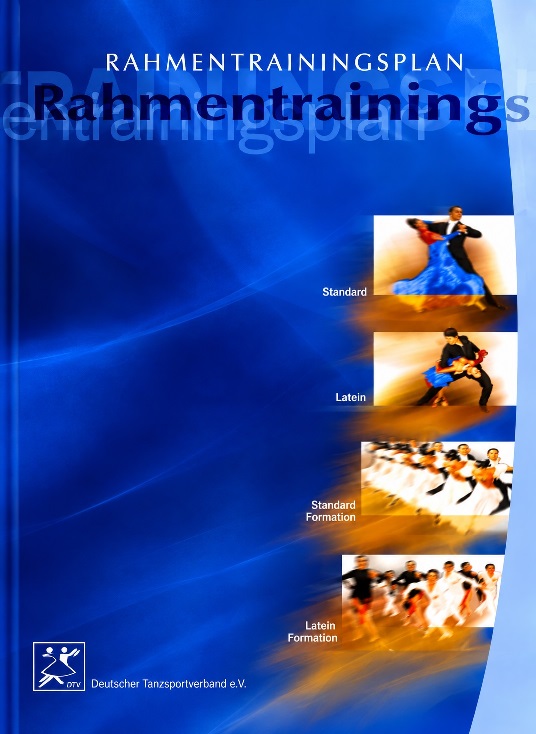
Rahmentrainingsplan – Tanzsport is an extensive training and development framework published by the Deutscher Tanzsportverband e.V. (DTV) for competitive DanceSport.
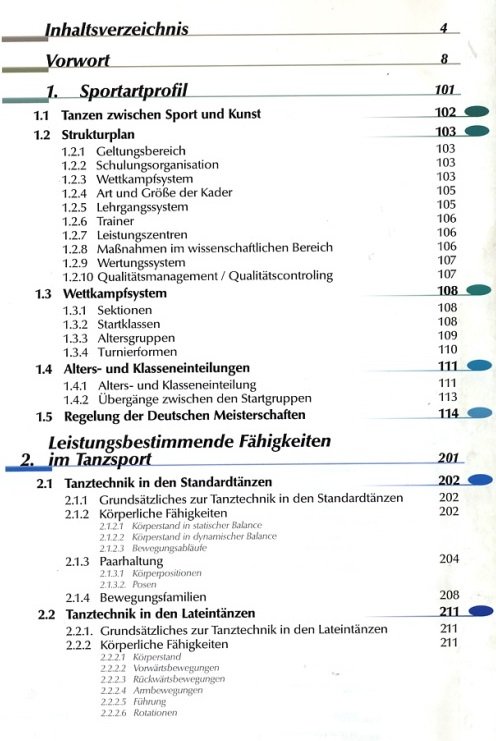
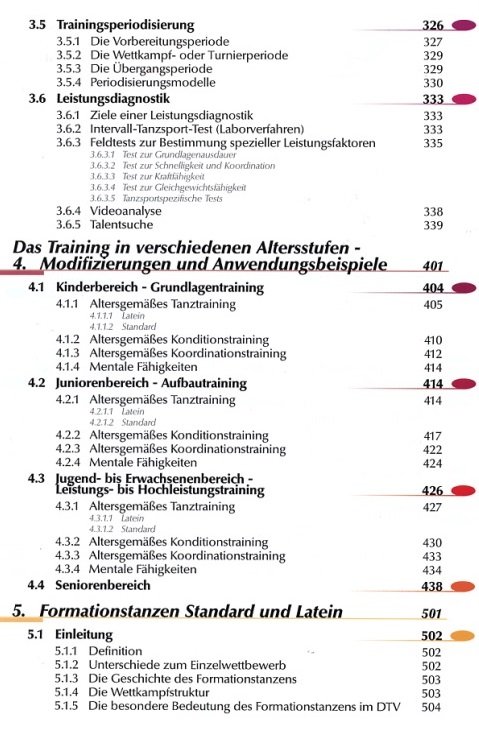
Rather than functioning as a conventional technique manual or collection of dance figures, the book presents a systematic approach to the long-term development of DanceSport athletes. It combines dance technique with sports science, physical conditioning, coordination, psychology, training methodology, performance analysis and organizational aspects of competitive dancing.
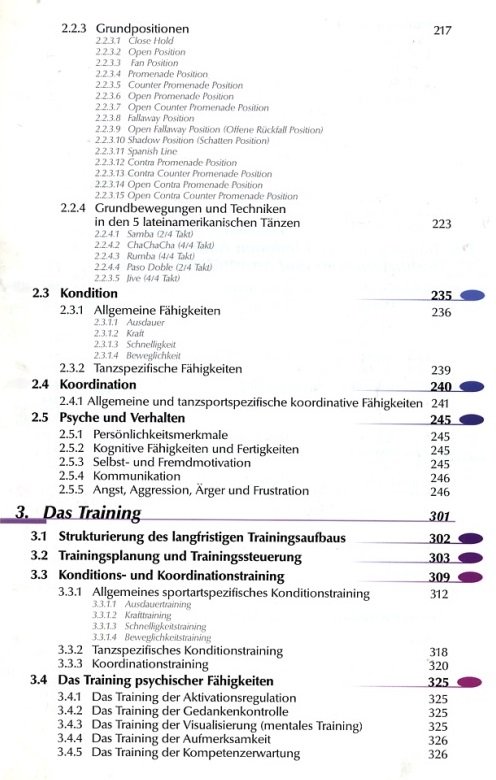
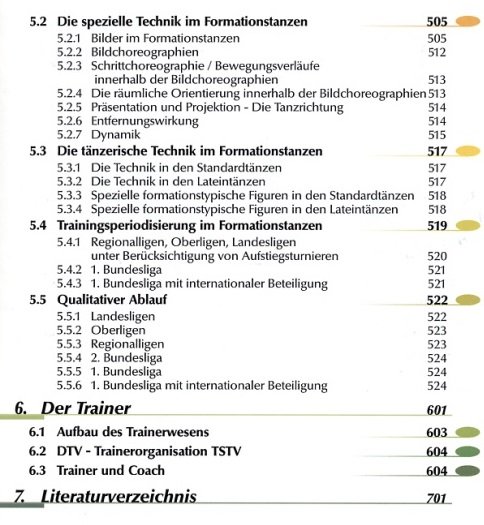
The technical sections cover both Standard and Latin American dancing. Standard topics include fundamental dance technique, static and dynamic balance, body movement, partnership and movement families. The Latin section addresses body mechanics, forward and backward movement, arm actions, lead and follow, rotations, fundamental dance positions and characteristic actions used across Samba, Cha Cha Cha, Rumba, Paso Doble and Jive.
Beyond technique, the book examines the physical requirements of competitive dancing, including endurance, strength, speed and flexibility, together with general and dance-specific coordination. Psychological topics include personality, cognitive skills, motivation, communication and dealing with anxiety, aggression, anger and frustration.
A substantial section is devoted to training methodology and long-term planning, including conditioning and coordination programs, mental training, visualization, attention control and periodization through preparation, competition and transition phases. Performance diagnostics are also addressed through laboratory and field testing, video analysis and talent identification.
The framework further provides age-specific approaches for children, juniors, youth, adults, high-performance competitors and seniors, integrating dance training with conditioning, coordination and mental development.
A dedicated section covers Standard and Latin Formation Dancing, including formation-specific technique, choreography, spatial orientation, presentation, dynamics and training periodization. The final chapters address the structure and responsibilities of trainers and coaches within the DTV system.
Main Topics
- Standard & Latin DanceSport technique
- Static and dynamic balance
- Partnership and movement principles
- Latin body actions and fundamental positions
- Endurance, strength, speed and flexibility
- Dance-specific conditioning
- Coordination and movement control
- Psychology and mental preparation
- Long-term training development
- Training planning and periodization
- Visualization and attention training
- Performance diagnostics and testing
- Video analysis
- Talent identification and development
- Age-specific training programs
- Standard & Latin Formation Dancing
- Trainer and coach development
- DanceSport competition structure

Reviews
There are no reviews yet.