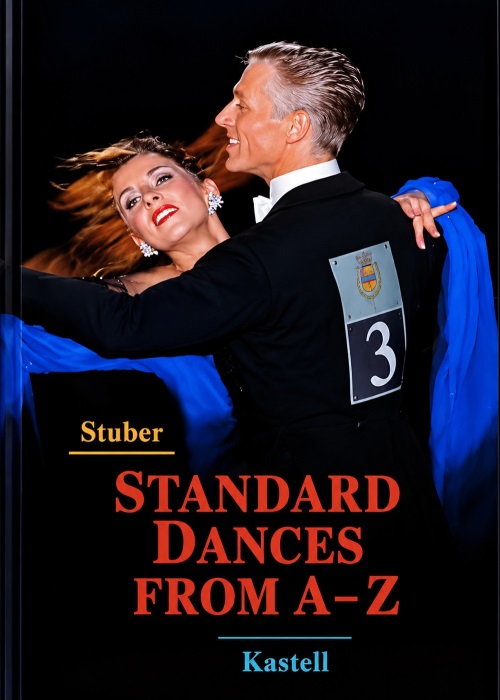
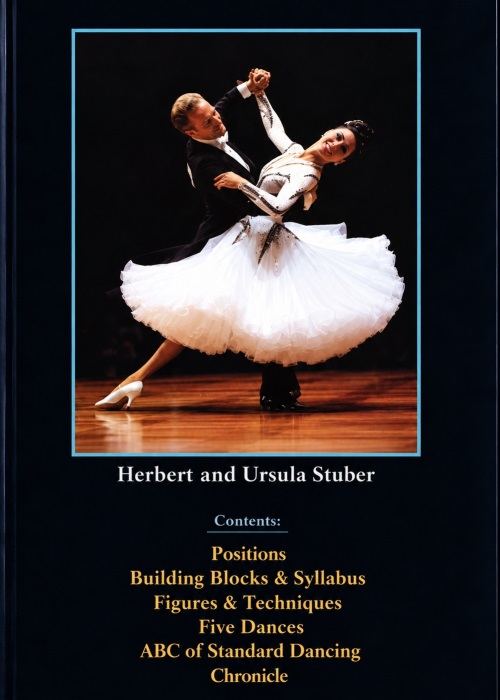
Standard Dances from A-Z by Herbert Stuber approaches Standard dancing from technical, physical, musical, and artistic perspectives. Rather than concentrating only on figures, the book examines the principles behind movement and partnership.
Topics include posture and poise, footwork, conditioning, timing, body actions, swing, rotation, choreography, and music. Separate sections are devoted to the five Standard dances: Slow Waltz, Tango, Viennese Waltz, Slow Foxtrot, and Quickstep.
A major part of the book is the A–Z of Standard Dancing, which explains dance terminology, movement concepts, technical principles, and organizations associated with Standard dancing. The book also includes a Chronology of Standard Dancing and a Person Index, making it useful both for study and as a reference work.
Contents
Instead of a Foreword
- A Small Portrait
- Abbreviations
Introduction
- Experienced and Learned
- Training
- Technique and Dynamics
- The Old Guard
- New Ideals – New Technique
- What’s New?
- Transitions
- Italian Style
- Looking Back
Stages
First Stage: The Dancer
- The Art of Footwork
- From Posture to Poise
- Two Types of Conditioning
Second Stage: The Partner
- The Third Weight
- Emancipated Dancing
- Timing
- The Lady in a Dilemma
- Occupied Positions and Discoveries
Third Stage: The Athlete
- Dangerous Order of Events
- Typology
Final Stage: The Artist
Building Blocks and Principles
Methodology
- Pluralism
- Seeing, Feeling, Thinking
Parts of the Body
- The Foot
- The Knee
- Hips and Pelvis
- Shoulders and Rib Cage
- The Arms
- The Head
The Step
- Standing Leg and Moving Leg
- Occupied Positions and Discoveries
Swing
- Swing Models
Rotation
- Countermovement
- Inside and Outside of Turn
Choreography
- Families of Figures
Music
- The Musician’s Dictate
- Strict Tempo
- “Plastic Music”
- Consequences
Five Standard Dances
- Slow Waltz
- Tango
- Viennese Waltz
- Slow Foxtrot
- Quickstep
- Show Dance / Competitive Routine

Reviews
There are no reviews yet.