
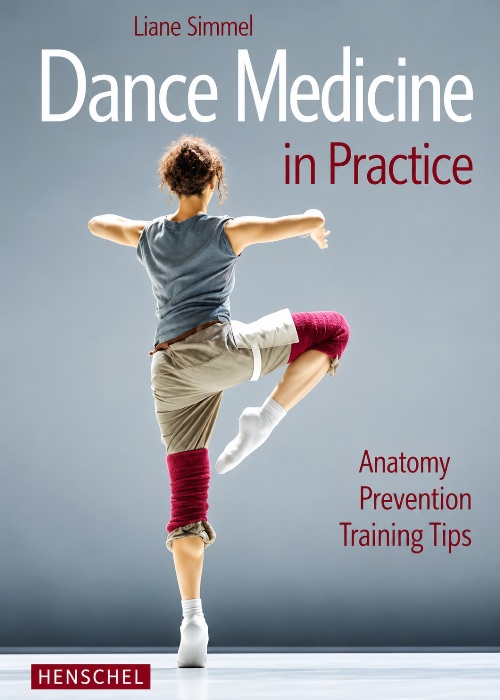
Dance Medicine in Practice combines essential anatomical knowledge with practical information about the physical demands of dance. Liane Simmel explains how the dancer’s body functions and examines common areas of load, overload, and potential problems that can arise during training.
The book begins with the foundations of the dancing body, including anatomical terminology, tissues, the skeletal system, muscles, and the nervous system. It then examines the spine, pelvis, hips, knees, feet, shoulders, and arms, with attention to anatomy, movement, physical load, individual analysis, and prevention.
A recurring structure connects each body region with typical pitfalls in dance, followed by practical prevention advice and targeted exercises. The later chapters broaden the subject to include the mind and dance, nutrition, growth and training of young dancers, and help and self-help for injuries.
This combination of anatomy, dance-specific analysis, and practical training guidance makes the book a useful reference for understanding and supporting the dancer’s body.
Contents
Introduction – A Practical Guide
1. The Foundations of the Dancing Body
- Anatomical Terminology of Movement
- Neutral Starting Position
- Body Axes and Planes
- Terminology of Movement
- Organization of the Body
- Tissue: Structure, Regeneration and Adaptation
- Skeletal System: Bones, Cartilage and Joints
- Muscular System
- Nervous System
2. The Spine – The Whole Is More Than the Sum of Its Parts
- 3-D Anatomy and Function
- Movements of the Spine
- Muscles
- Static Alignment and Breathing
- Load and Overload
- Typical Pitfalls in Dance
- Individual Analysis
- Tips and Tricks for Prevention
3. The Pelvis as the Center
- 3-D Anatomy and Function
- Movements of the Pelvis
- Muscles
- Load and Overload
- Forced Turnout and Pelvic Alignment
- Individual Analysis
- Prevention and Targeted Exercises
4. The Hip – A Joint with Consequences
- 3-D Anatomy
- Hip Movement and Muscles
- Load and Overload
- Forced Turnout
- High Leg Positions
- Hip Mobility and Hip Dysplasia
- Individual Analysis
- Prevention
5. Stable on Your Legs – The Knee as a Coordinating Unit
- Knee Anatomy and Function
- Movements of the Knee Joint
- Muscles and Leg Alignment
- Load and Overload
- Forced Turnout
- Uncontrolled Plié
- Hyperextended Knees
- Individual Analysis and Prevention
6. The Foot as a Foundation
- 3-D Anatomy and Function
- Arches and Joints of the Foot
- Foot Movement
- Muscles and Foot Shapes
- Load and Overload
- Pointe and Relevé
- High Arches and Foot Strain
- Individual Analysis
- Prevention and Training
7. Shoulders and Arms – Stability Despite Mobility
- 3-D Anatomy and Function
- Shoulder and Arm Movement
- Muscles
- Load and Overload
- Raised Shoulders
- Retracted Shoulder Blades
- Individual Analysis
- Prevention
8. The Mind Dances Too
- Psychological Demands of Dance
- The Influence of Dance Classes
- Dance Corrections and Personality
- Dancing as a Profession
- Maintaining Balance
- Saying Goodbye to Dance
9. Nutrition – An Important Part of Training
- Carbohydrates, Fats and Protein
- Vitamins and Minerals
- Hydration
- Energy Balance and Body Weight
- Eating Disorders and Health Consequences
10. Dancing During Growth
- Basics of Growth
- Growth Spurts
- Training at Different Ages
- Flexibility, Coordination, Strength and Endurance
- Training During Growth
- Challenges for Adolescent Dancers
11. Help and Self-Help – Dealing with Injuries
- Inflammation and Healing
- The Inflammatory Response
- The Healing Process


















Reviews
There are no reviews yet.