
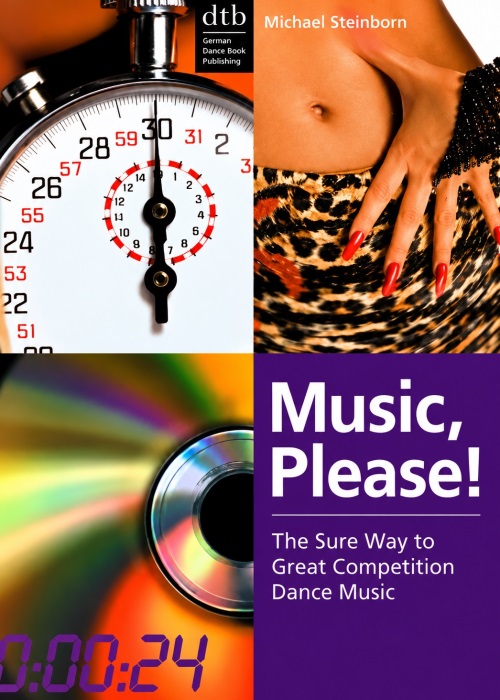
Music, Please! – The Sure Way to Great Competition Dance Music provides a practical and systematic look at the role of music in dance competitions. Michael Steinborn combines musical knowledge with the technical and organizational considerations required to prepare and manage competition music effectively.
The first major section, “The Hardware,” covers audio media, playback equipment, accessories, and the organization and archiving of a music collection. The book then moves to “The Software,” where the focus shifts to the music itself: dance characteristics, determining tempo, time-signature changes and pauses, tempo control, instrumental versus vocal tracks, track length, introductions, and levels of difficulty.
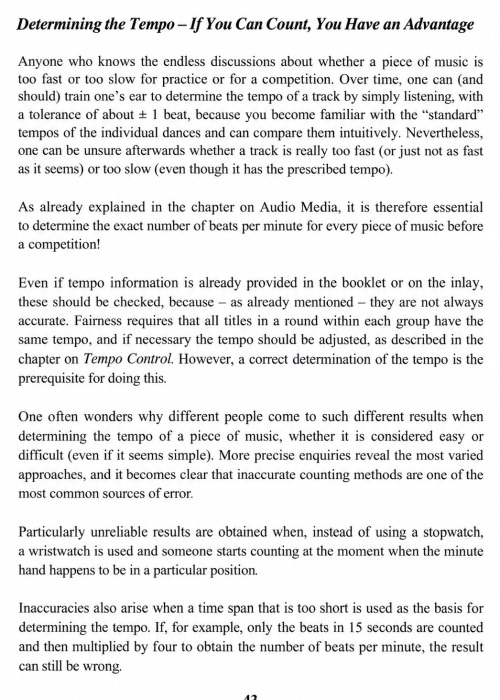
Tempo receives particular attention. The book explains why simply relying on how fast or slow a track sounds can be misleading, why tempo information should be checked, and why accurate counting is important when preparing music for competition. It also discusses common sources of error when determining beats per minute.
The later chapters follow the practical progression of a competition, covering competition preparation, equipment setup, sound checks, coordination with the competition director, warm-up, entrance, first and intermediate rounds, semifinals, finals, awards ceremonies, fanfares, and formation events.
Finally, the book addresses post-competition evaluation, including the use of feedback and the development of an individual musical style. This combination of music, tempo, technology, organization, and competition practice makes Music, Please! a useful reference for anyone responsible for music in a DanceSport competition environment.
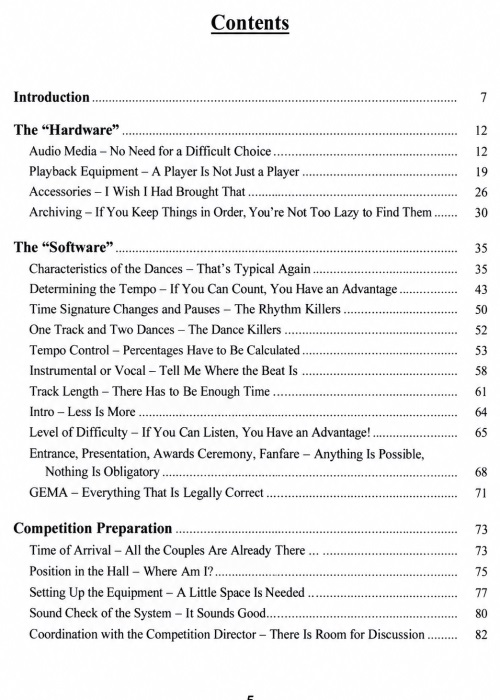
Contents
Introduction
The “Hardware”
- Audio Media – No Need for a Difficult Choice
- Playback Equipment – A Player Is Not Just a Player
- Accessories – I Wish I Had Brought That
- Archiving – If You Keep Things in Order, You’re Not Too Lazy to Find Them
The “Software”
- Characteristics of the Dances – That’s Typical Again
- Determining the Tempo – If You Can Count, You Have an Advantage
- Time Signature Changes and Pauses – The Rhythm Killers
- One Track and Two Dances – The Dance Killers
- Tempo Control – Percentages Have to Be Calculated
- Instrumental or Vocal – Tell Me Where the Beat Is
- Track Length – There Has to Be Enough Time
- Intro – Less Is More
- Level of Difficulty – If You Can Listen, You Have an Advantage!
- Entrance, Presentation, Awards Ceremony, Fanfare – Anything Is Possible, Nothing Is Obligatory
- GEMA – Everything That Is Legally Correct
Competition Preparation
- Time of Arrival – All the Couples Are Already There …
- Position in the Hall – Where Am I?
- Setting Up the Equipment – A Little Space Is Needed
- Sound Check of the System – It Sounds Good
- Coordination with the Competition Director – There Is Room for Discussion
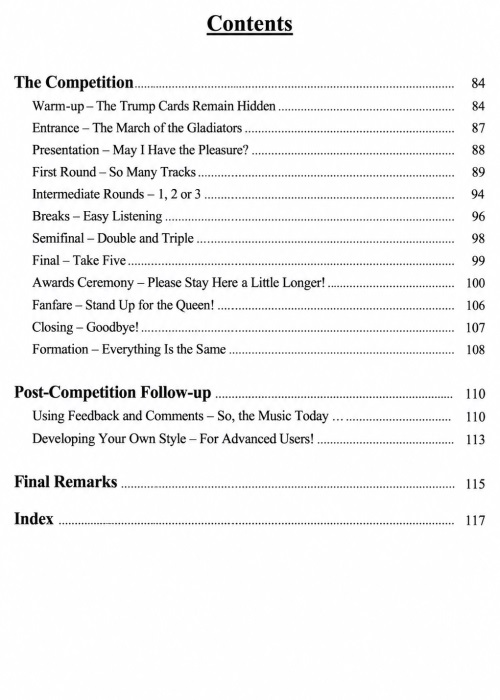
The Competition
- Warm-up – The Trump Cards Remain Hidden
- Entrance – The March of the Gladiators
- Presentation – May I Have the Pleasure?
- First Round – So Many Tracks
- Intermediate Rounds – 1, 2 or 3
- Breaks – Easy Listening
- Semifinal – Double and Triple
- Final – Take Five
- Awards Ceremony – Please Stay Here a Little Longer!
- Fanfare – Stand Up for the Queen!
- Closing – Goodbye!
- Formation – Everything Is the Same
Post-Competition Follow-up
- Using Feedback and Comments – So, the Music Today …
- Developing Your Own Style – For Advanced Users!
Further Contents
- Final Remarks
- Index
Who Is This Book For?
Music, Please! is particularly suitable for competition DJs and music operators, as well as competition directors, event organizers, coaches, adjudicators, and competitive dancers who want to understand how music contributes to the structure and quality of a dance competition.
It is especially valuable for readers who want to learn how to select appropriate dance music, determine and control tempo, organize a music library, prepare playback equipment, conduct sound checks, and choose music for different stages of a competition.
Rather than focusing only on individual songs, the book presents competition music as a complete process—from technical preparation before the event to musical decisions during each round and evaluation after the competition.

Reviews
There are no reviews yet.