
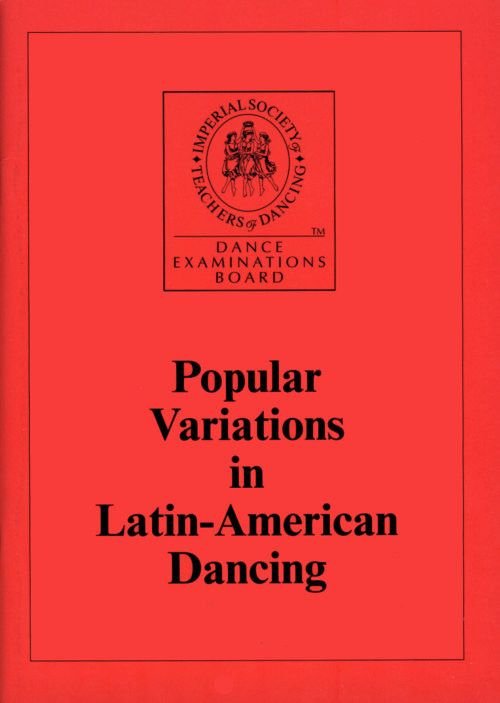
ISTD Popular Variations in Latin-American Dancing is a collection of established International Latin dance variations published by the Imperial Society of Teachers of Dancing (ISTD). Edited by Elizabeth Romain on behalf of the Latin-American Dance Faculty Committee, the book brings together material intended for teachers, examination candidates and dancers studying Latin technique beyond the basic syllabus figures.
The 1982 publication incorporates Popular Variations from earlier ISTD collections issued in 1972 and 1976, together with additional material introduced through subsequent instructional courses. Its purpose is to preserve and organise these variations as a practical reference for technical study, teaching and choreography.
Technical Variations Across Five Latin Dances
The book covers all five International Latin dances, presenting 66 variations organised into separate sections.
Each variation follows the established ISTD technical approach, with step descriptions, rhythm, timing and relevant technical information. The collection allows readers to examine how familiar Latin actions and figures can be developed into more varied sequences.
Rather than functioning as an introductory dance course, the book is designed for readers who already have a working knowledge of International Latin technique and wish to explore additional combinations and established variations.
Contents – Popular Variations
Rumba – 14 Variations
A collection of Rumba variations for studying figure combinations, rhythmic interpretation and the development of movement sequences.
Samba – 16 Variations
Sixteen variations exploring Samba figure combinations and characteristic rhythmic patterns.
Paso Doble – 8 Variations
Eight variations featuring the distinctive figures, shaping and movement patterns associated with Paso Doble.
Jive – 15 Variations
Fifteen Jive variations providing additional material for figure combinations, timing and technical study.
Cha Cha Cha – 13 Variations
Thirteen variations extending the study of Cha Cha Cha through established combinations and technical descriptions.
Total: 66 Popular Variations across five International Latin dances.
A Reference for Latin Dance Teaching and Choreography
One of the book’s principal strengths is its organisation of variations developed and published through different periods of ISTD teaching activity. Bringing these materials together in a single volume makes them easier to consult when preparing lessons or studying established Latin choreography.
Dance teachers can use the collection to explore additional figure combinations, while experienced students and examination candidates can refer to its technical descriptions when developing their understanding of International Latin movement.
The book also offers a historical reference to the teaching and choreography material associated with the ISTD Latin-American Dance Faculty.









Reviews
There are no reviews yet.