
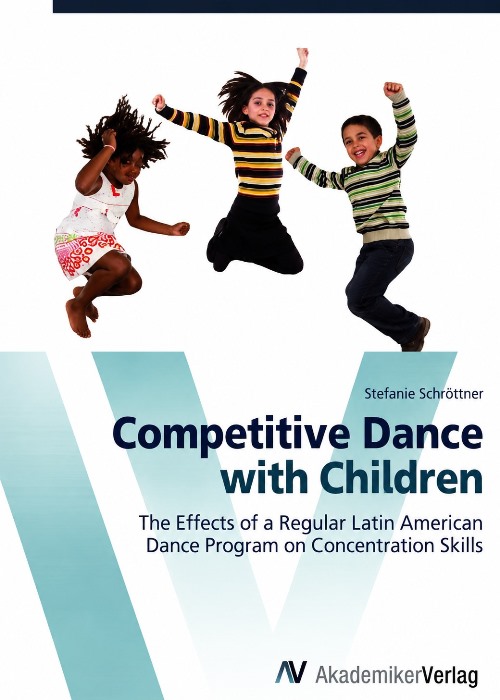
Competitive Dance with Children by Stefanie Schröttner examines the relationship between dancesport and children’s ability to concentrate, with particular attention to the effects of a regularly conducted Latin American dance program.
The book first introduces the theoretical foundations of concentration and attention, including the conditions required for concentration, different dimensions of attention, concentration training, and both external and internal factors that can interfere with a child’s ability to focus. It then provides background on the history and development of dancesport before bringing the two subjects—dance and concentration—together.
A central part of the book presents an intervention dance program designed for children. Practical examples include Latin dances such as Jive, Paso Doble, and Cha-Cha-Cha, with structured sessions combining warm-up exercises, individual practice, dancing to music, partner work, and choreography.
The empirical section evaluates the effects of the dance program through attention and concentration testing and compares the intervention group with a control group. According to the book’s summary, improvements were observed in both classes.
Rather than being a general children’s choreography manual, this work is particularly valuable for readers interested in the educational and psychological aspects of dancesport, especially the possible relationship between regular dance training and concentration in children.
Contents
1. Introduction
Introduction to the central research question and structure of the study.
2. Concentration
- Conditions for concentration
- Dimensions of attention and concentration
- Attention control and concentration training
- Barriers to concentration
- External concentration barriers
- Internal concentration barriers
3. Dancesport
- History and development of dancesport
4. Dancesport and Concentration
Discussion of the relationship between dance training and the ability to concentrate.
5. Empirical Study
- The intervention dance program
- Curriculum requirements
- Testing and evaluation
- Comparison of results
6. Summary
Summary of the study and its findings.
7. Literature and References
8. List of Figures and Tables
9. Appendix
Practical Dance Program
The book includes examples from the intervention program rather than discussing the subject only theoretically. Dance sessions shown in the material include:
- Jive
- Paso Doble
- Cha-Cha-Cha
- Joint-mobilization warm-ups
- Individual exercises
- Dancing with music
- Partner practice
- Basic choreography
For example, the Cha-Cha-Cha sessions include movements and figures such as Check to Promenade Position, Check from Open PP and CPP, and Time Step, followed by partner choreography.

Reviews
There are no reviews yet.