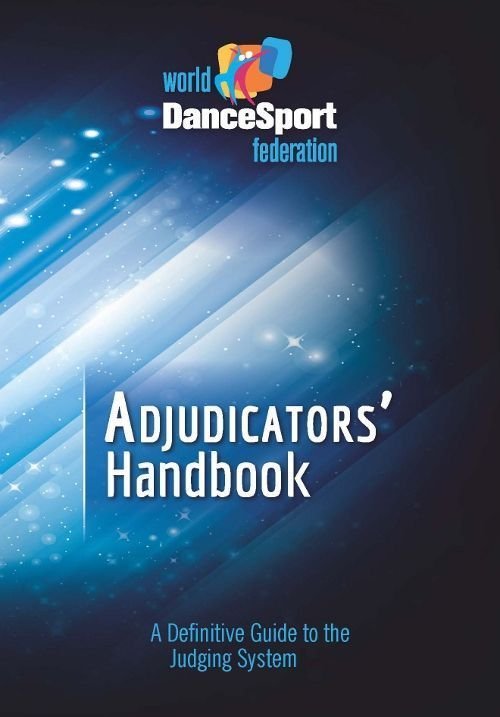
WDSF Adjudicators Handbook: The Ultimate Assessment Blueprint for Elite Competitors and Officials
Stop guessing what happens behind the judging panels. The WDSF Adjudicators Handbook, officially formulated by the World DanceSport Federation, stands as the definitive constitutional text governing modern DanceSport evaluation. While this manual is engineered as the mandatory regulatory curriculum for international adjudicators sitting for their official licensing examinations, it has quietly become the most powerful training weapon for elite athletes and visionary coaches worldwide.
As a competitive dancer, understanding the precise metrics of how your performance is broken down is the ultimate shortcut to the podium. This premium Digital Ebook provides an uncompromised look into the official WDSF Absolute Judging System, giving you a transparent, granular map of the exact mechanical and artistic benchmarks required to dominate international GrandSlam, World Championship, and continental stages.
Why Every Serious DanceSport Athlete Needs This Map Early:
If you do not know exactly what to aim for, the road to gaining the level of knowledge and skills you dream of winds inefficiently, wastefully, and frustratingly. Most students spend years practicing vague concepts without realizing how they are being measured. Presenting this official WDSF judging map early to competitive dancers acts as a strategic personal guide and a strict performance checklist throughout their ongoing daily training. It bridges the gap between raw effort and high-scoring execution.
The Four Core Pillars of WDSF Assessment Analyzed Inside:
1. Technical Quality (TQ): Deep-dive into how adjudicators analyze skeletal alignment, dynamic posture, foot pressure, heel/toe footwork precision, and the clean execution of rise-and-fall or Cuban motion mechanics.
2. Movement to Music (MM): Uncover the exact rules of timing, rhythmic structure, syncopation metrics, and how couples must physically manifest musical phrasing, acoustic textures, and structural accents into their movement.
3. Partnering Skills (PS): Learn the strict laws governing the physical frame volume, hand-hold geometry, center connection, spatial awareness, and the biomechanical efficiency of the lead-and-follow transmission.
4. Choreography and Presentation (CP): Master how judges evaluate floor craft, routine composition, structural variation compliance, balance of lines, charisma, and authentic presentation of the dance’s specific character.
CONTENTS
Technical Quality
- Posture
- Dance Holds
- Balance
- Foot Actions
- Latin Actions
- Body Actions
- Preparation Action Recovering
- Spins anf Turns
- Isolation/Coordination
- Skilled Figures
- Dynamics
- Lines and Extended Lines
Movement to Music
- Timing/Shuffle Timing
- Rhythm
- Musical Structure
Partnering Skills
- Physical Communication
- Overbalance/Counterbalance/Holds/Drops
- Use of Space
- Synchronization
- Consistency
Choreography and Presentation
- Non Verbal Communications-NVC
- Positioning Floor Craft
- Characterization
- Energy Application
- Atmosphere


Reviews
There are no reviews yet.